
For the autumn semester at EHU, eight Erasmus students arrived. They came from Germany, Turkey, Spain and Italy. Vilnius welcomed them with snow and frost, but still let them go with warm and lasting memories.
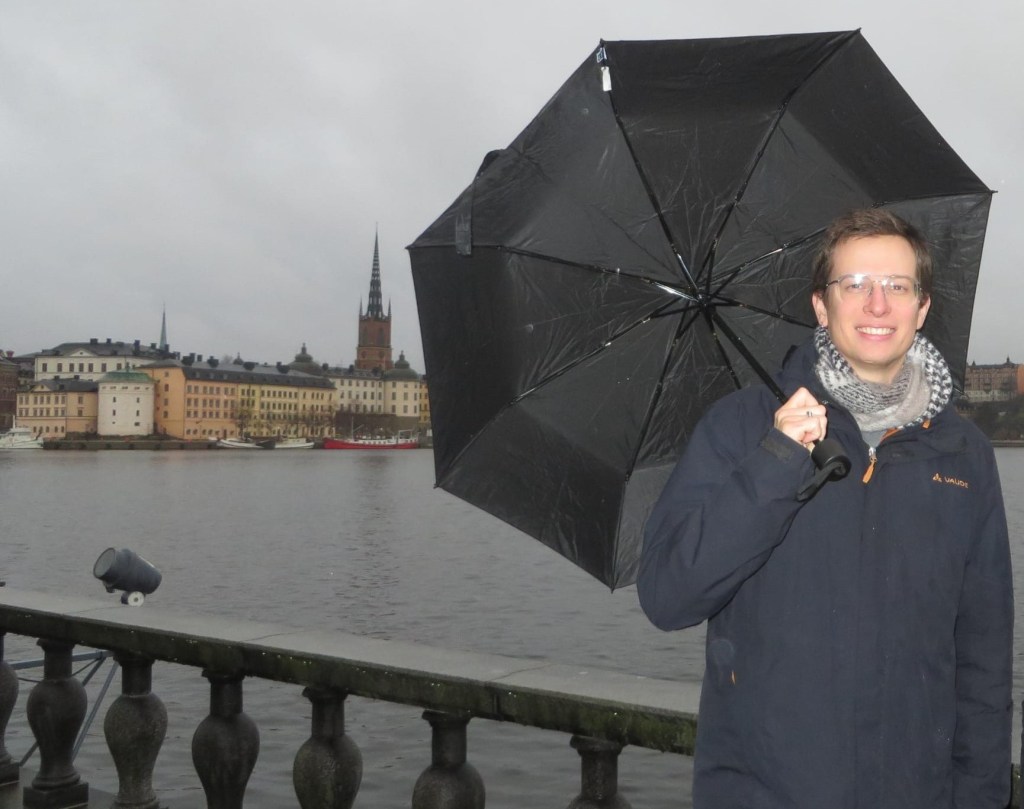
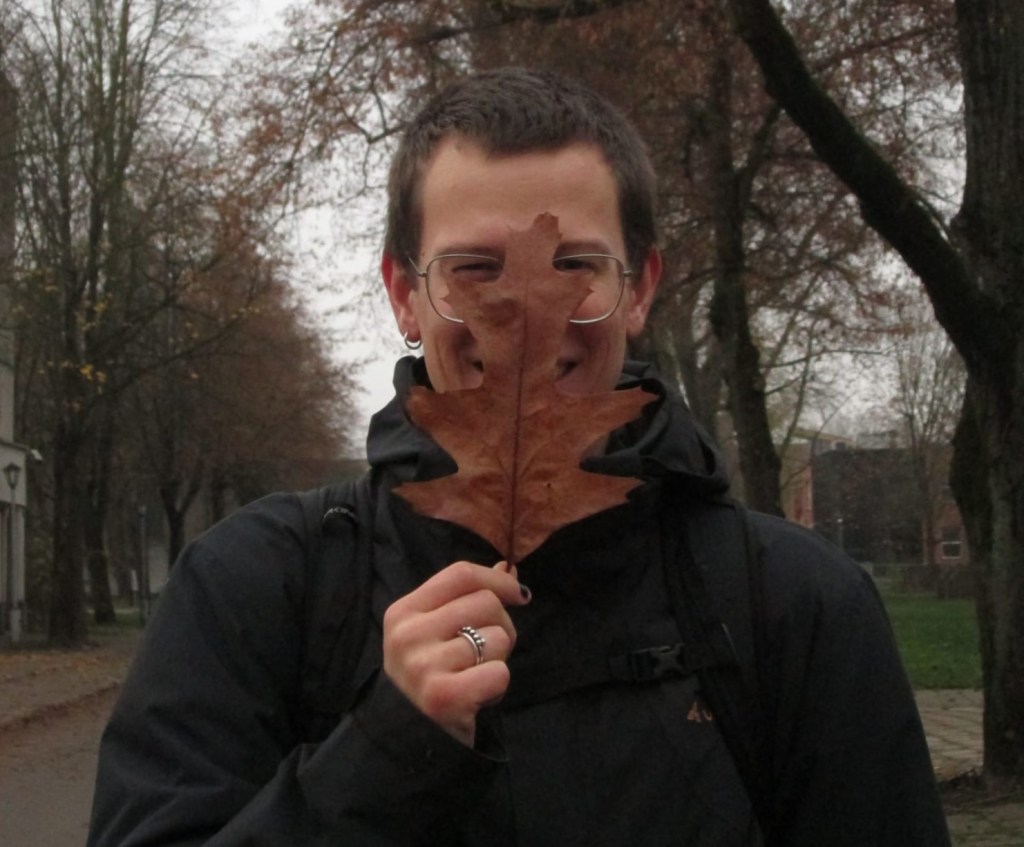
Our guest today is Jan from Darmstadt, a city near Frankfurt. Jan is 25 years old, he works as a substitute teacher at his former school and is studying Biology and History to become a teacher at Technische Universität Darmstadt. He was interested in Eastern Europe, so Lithuania became his destination.
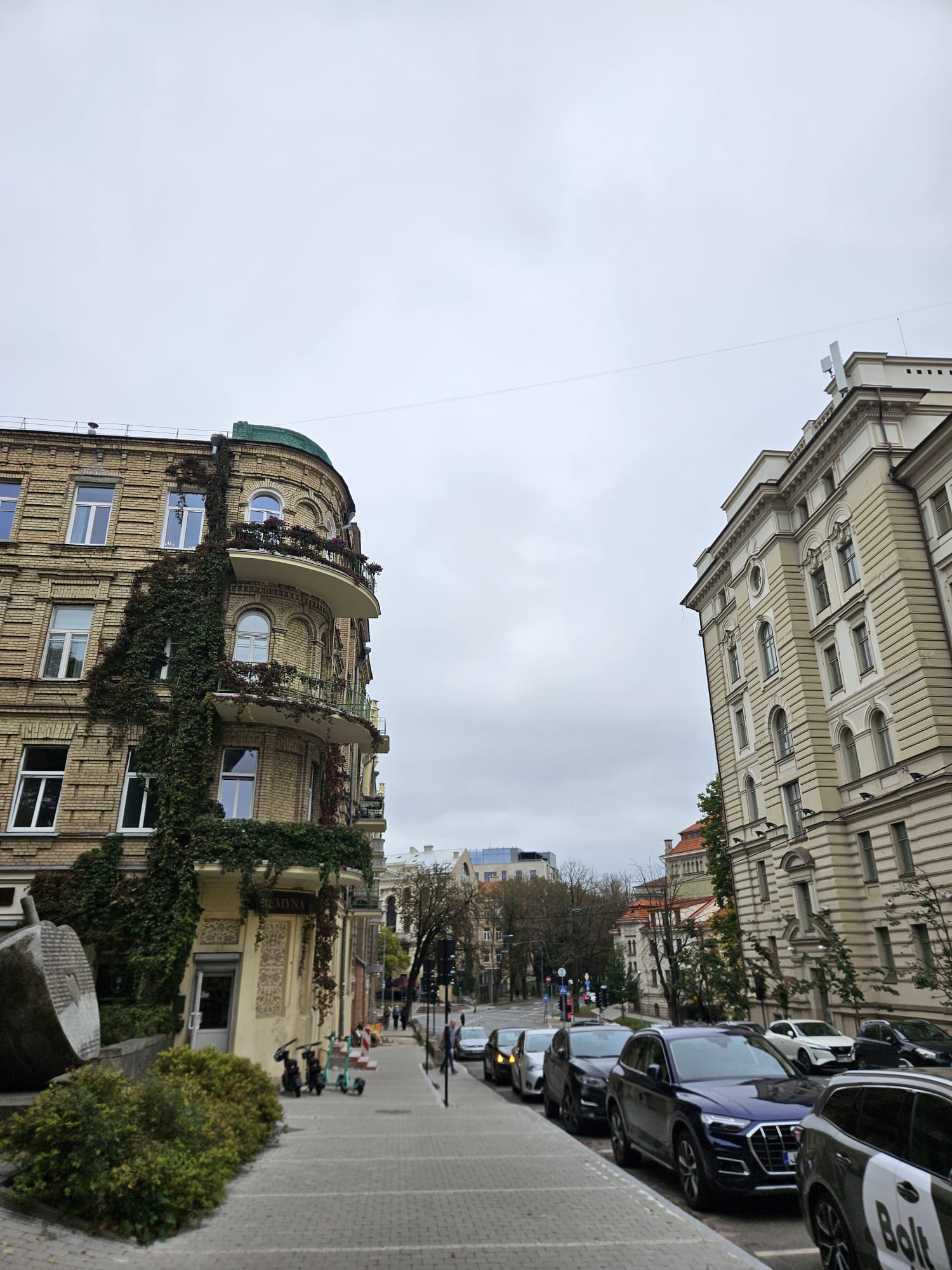
Jan appreciated the contrasts in Vilnius: “You can see the beautiful Old Town and also what we call ‘Plattenbau’ – the typical Soviet buildings. And on the other side of the river, there is a completely new and modern city.”
Exclusively for The EHU Times, Jan tells us about his time in Vilnius, personal growth, and reflections on EHU.
About the flight and expectations
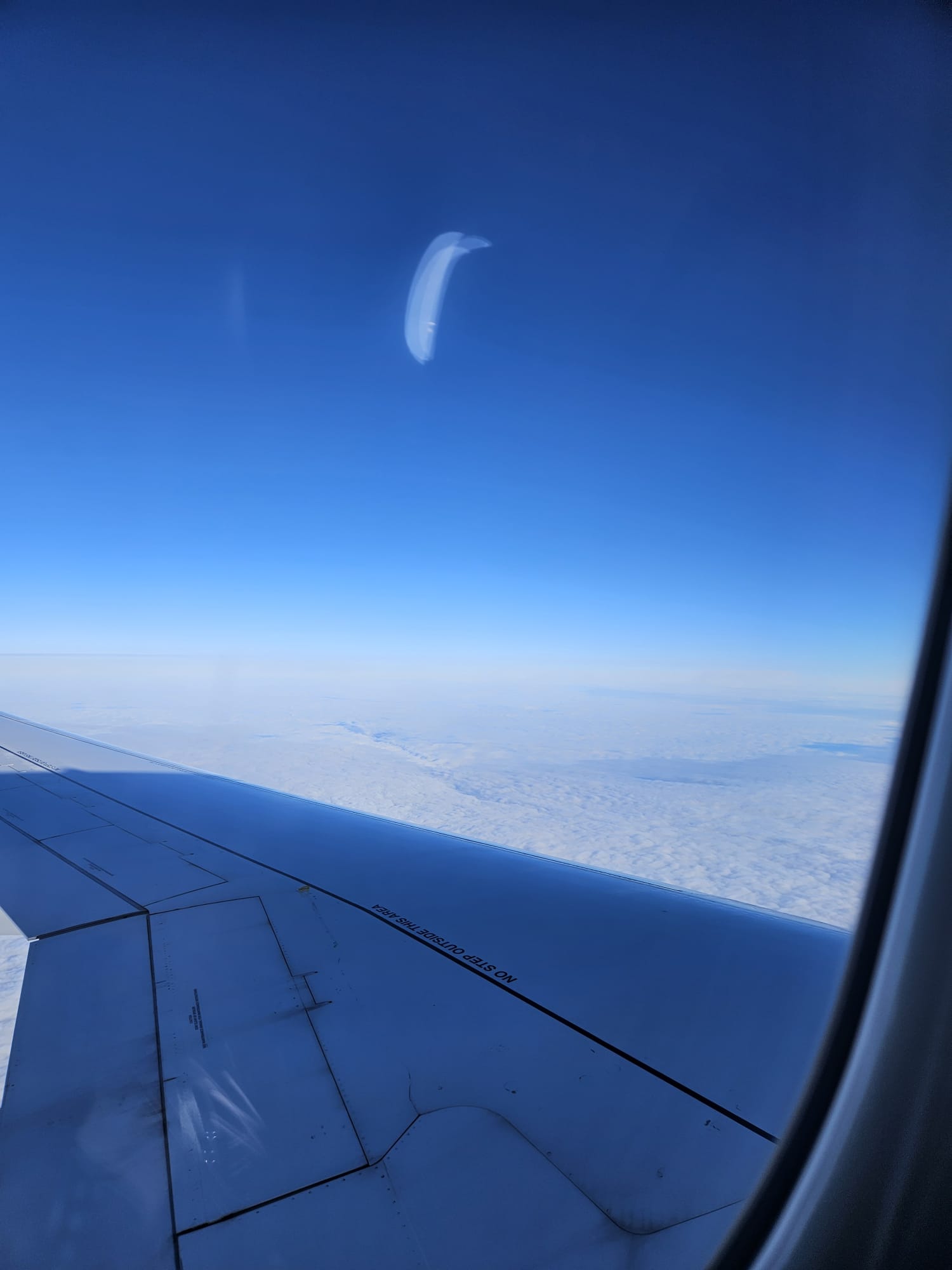
– My first day in Vilnius was on September 29th. I arrived really late in the evening by plane. Then I took a taxi to my apartment, and it was already 7 p.m. My first thought was, “Okay, I have to get some food.” So I went to Lidl to buy something to eat, and then it was already 9 in the evening. I was like, “I’m way too lazy to cook now, because I started traveling from Frankfurt at 5 a.m.” That’s why I went to a vegan restaurant called RoseHip – it was only five minutes away from my apartment. I had dinner on my own, went back home, and went straight to bed. I was so tired at that point that I slept for about 10 hours. The next morning, I woke up and went to EHU for the first time…
In general, I decided to go on an exchange semester because my best friend had gone to France a year before me. I visited him there once, and he was so convinced about how Erasmus works: connecting with other people, living in a completely new city, and getting to know yourself. So I thought, “Let’s just do it.” The decision-making process for the partner university was quite quick, because I really wanted to live in Eastern Europe for the time of my Erasmus. My university only had two options for a History B. Sc. in this region: one in Hungary and one in Lithuania. Personally, I don’t really agree with the politics of Hungary, so I was like, “I will choose Lithuania as my first choice, because I have never been to the Baltics, and Hungary as my second.” And Italy was my third choice.
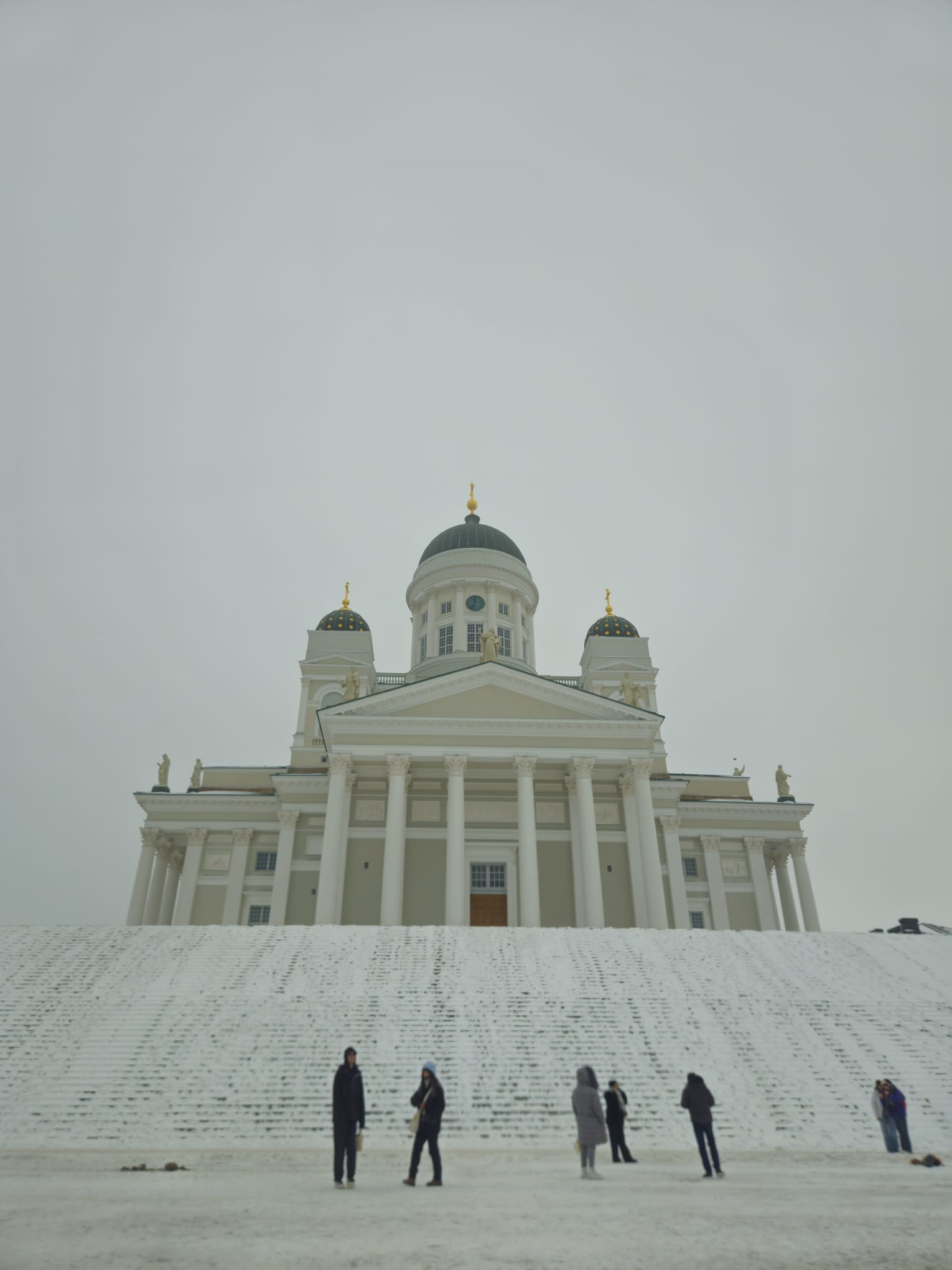
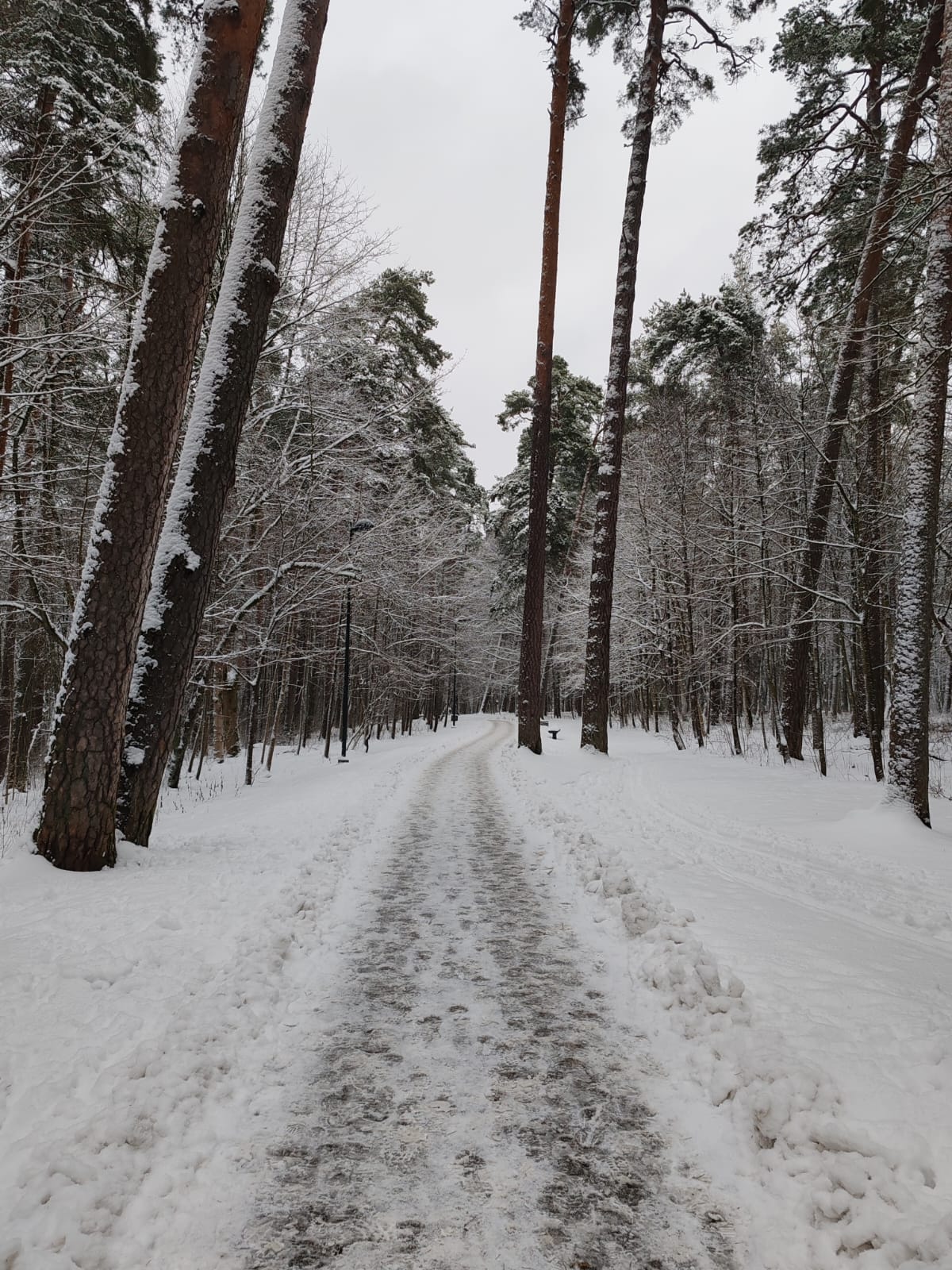
One of my expectations about Erasmus in Lithuania was that I would improve my Russian-speaking skills. Sadly, that did not really happen. I also expected a good winter, because compared to Germany, we don’t really have winters with -15 degrees and eventually it turned out to be such an amazing winter with a lot of snow! That gave me the opportunity to ski for the first time in my life in Vilnius!
I didn’t really have any expectations about the university. I just knew that it was quite small and that in the past it was a Belarusian university that had to relocate to Lithuania because of Belarusian politics, so I assumed it would be very different in terms of organization, teaching, and language. And that turned out to be true. I would even say it was a kind of culture shock, but more in an organizational sense. When I arrived, they said, “Okay, classes are already starting,” and I was like, “I don’t even have my learning agreement finished yet.” So organizationally, my expectations were kind of dimmed.
And for Lithuania or Vilnius, I didn’t have many expectations either, because I didn’t know the culture and the language at all. And it turned out to be such a great improvement of my knowledge about this region. Each country in the Baltics is so unique and, at the same time, for me quite similar – but also not at all. It’s hard to explain. But Vilnius got so deep into my heart, it’s amazing. I will always have really fond memories of the city.
About courses and lectures
– I had only three courses, which in total were 18 credits. One was weekly, one was every second week, and another was about twice a month. The lectures of the third course were always in the same week, because my teacher had to travel from Hungary to Lithuania. So I didn’t have that many lectures. Maybe Friday was the most typical university day for me, because I either had an online class or an in-person class in the Old Town. We were switching every week between a lecture and a seminar, for which we had to prepare a little homework, usually a presentation about a specific topic. I arrived there maybe 10 minutes before, had my homework done, gave my presentation, and then went home. Sometimes I also went to the library to study there. In general, I didn’t have to do so much for university. Compared to Germany, the workload was really small. What was kinda new for me were the midterms, because we usually only have a final exam or a final paper to write in Germany.
I liked one lecture on political science. It was about Central and Eastern Europe and its politics. For example, I had a presentation about the history of this region. It was about how the countries developed from the 19th century until today. We talked about the First and Second World Wars and about the period of independence in between, especially how important that period was for the Baltics. We also discussed how the European Union and NATO got involved after the Soviet Union collapsed, and looked at how the United States intervened, and so on. That was really interesting.
The other lecture was an introduction to International Relations. That was like a typical lecture that I could have had in Germany too. Even though the teaching style was similar, the knowledge I gained was completely new. Another lecture was in European Heritage, about the Basics of Cultural Management. That was a topic that I didn’t really relate to before, and I’m still not really into it. At the beginning, it was really interesting, and at the end it sadly got a bit boring, because I noticed: the politics course I do like, because I like politics and discussions, and European Heritage is maybe just not my topic. I would probably not study it.
About adaptation and buddies
– The hardest part for me was to adapt to the grocery stores, because as a vegan, it’s quite hard in Vilnius. I noticed this when I traveled to different countries in the region and then got back to Germany for Christmas. Veganism in Germany is like heaven. And in other countries and cultures, it’s not that developed so far. So, I had to eat differently. I was still vegan, but I had to organize my diet in a completely different way. I think that was probably the hardest part. And maybe also the really, really cold nights – like when it was minus 25. I was shivering the whole time and therefore I noticed that the clothes that I had packed were only good for the mild winters in Germany and I had to layer a lot to keep warm.
At EHU, there are not that many Lithuanians, so I was speaking mainly with Belarusian and Russian students. In general, I didn’t meet many Lithuanians my age, which is actually a bit sad. I was mostly communicating with Erasmus friends from EHU, Vilnius University or other universities, because it’s a big bubble within the European Student Network.
On my first day at EHU, when I met my future friends at the New Campus, Julia and I were talking in the hallway in German and other EHU students noticed that and stopped by, “Oh wait, you don’t speak Belarusian or Russian?” and we answered them, “Yeah, because Julia and I, we’re both German students, doing our Erasmus here.” Then there was a group around us, and we were just standing in the middle, and everyone was trying to ask us something.
If we’re talking about my opinion on organizational matters… Let’s start in general. Evelina and Natalia were the team behind the International Office at EHU. They were both really friendly. And tried to improve our Erasmus at EHU in a positive way. But I do have to say that I did not like the concept of getting the lecture schedule only for 4 weeks in advance. It was harder to plan trips in advance, when I did not know when I would have class in the next weeks. But I do not know the reasons for this concept and therefore I can’t really judge it.
We all also had a buddy. Mine was Anna. She was also a lovely and friendly person. She is from Belarus and she helped me with every question that I had. That was perfect for starting at EHU and in Vilnius in general, because she had already been living there for some years and she had an answer to almost every question I had, especially about which courses I could attend; how to get cheaper groceries and so on.
There was also the head of the buddies, Maryia. She was also a kind person. She organized different EHU activities for us Erasmus students, such as going to Trakai, going out for traditional Lithuanian food, bowling, and so on. Erasmus students and their buddies could get to know each other better on these activities in the Welcome Week. Sadly, not all buddies attended, but Anna, for example, was always there.
About Vilnius and growth
– As a student, I would say that Vilnius was a perfect city to live in because the costs are really low compared to Germany: food is cheap, beer is cheap, and going out every evening is possible because there are many places. So, for student life, it’s really perfect. Another thing I noticed is public transport. There are incredibly many buses in Vilnius. But as I mentioned before, I didn’t get to know many Lithuanians. So, I can’t really say how politics are for the people, how the education system or how health insurance works, and so on.
I probably spent most evenings with my Erasmus friends, for example at my favorite bar — Bukowski. I also visited the Indian Embassy on Gedimino Street twice a week, because they had free yoga lectures. To the Fitness Studio I went every second day with a sauna session afterwards. I also spent some free time in the Old Town, where I often walked through the secondhand shops like Humana and 50 Cent Boutique. Going out for food, I just loved the RoseHip Garden the most.
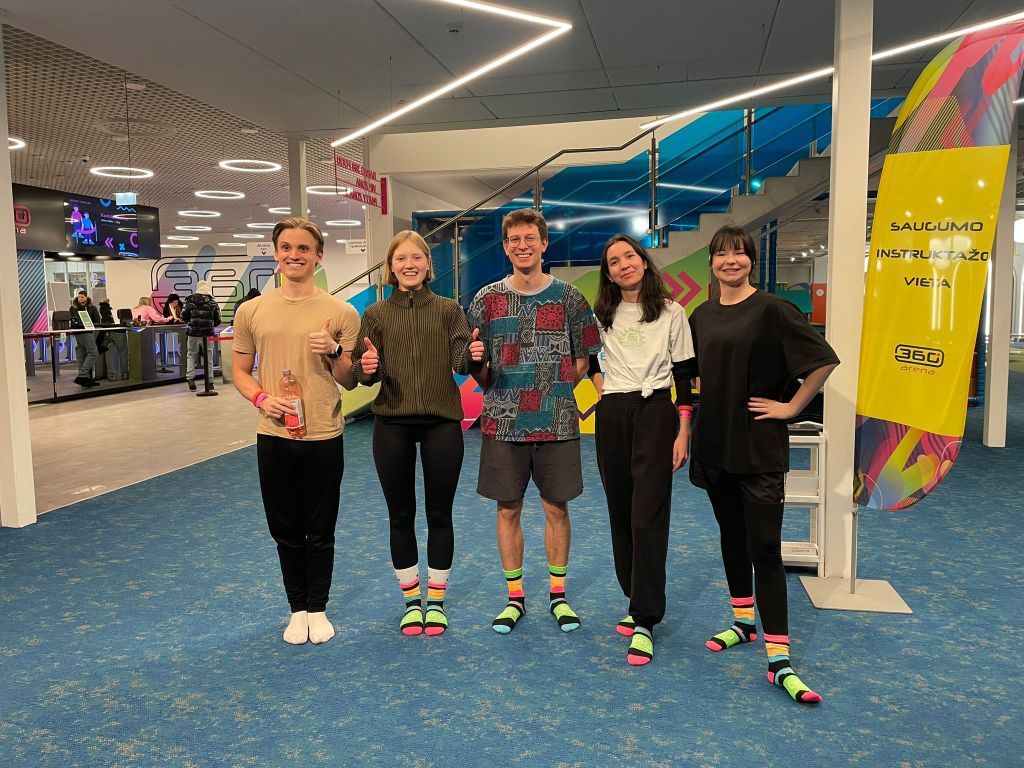
My favorite Erasmus memories are the spontaneous trips to Klaipėda, Kaunas, Stockholm, Oslo, Tallinn, Helsinki, and Warsaw. That was my favorite part. And also, just writing in the big group, “Hey, is anyone down to go for a drink?” and almost every time someone answered, “Yeah, okay, let’s go.” That was amazing. Every week we also had a “Stammtisch” because there were many Germans in my Erasmus group. Stammtisch means that people meet on a specific day and time of the week to gather together and spend time with each other. For us, it was every Wednesday evening, and we always went to a different bar. That was really fun.
Erasmus changed me. I know more about myself now – how I can connect with other people, how I can live on my own in a new city. This knowledge will always stay with me. When I got back to Germany, I was thinking, “What’s different now?”
Maybe it’s about the perception of time, the value of new people and friends. Now I know that I have friends living in completely different countries, and I won’t see them every day anymore. It’s important to stay in contact with these people and to remind yourself of what this time in Vilnius meant to me: lots of laughing, lots of new people, lots of fun, and even tears when it was time to say a final goodbye. And then saying goodbye to a home I had lived in for four months when it was time for me to leave Lithuania at the beginning of February. It’s a way of dealing with grief, because it feels like my time in Vilnius has simply passed so fast.
BLITZ SURVEY
Favorite subject at school?
– Biology.
Favorite movie?
– Harry Potter and the Order of the Phoenix.
What did you listen to most often this semester?
– Puhh… Techno.
Favorite book?
– Eragon (Christopher Paolini) or Percy Jackson (Rick Riordan)
Favorite dish?
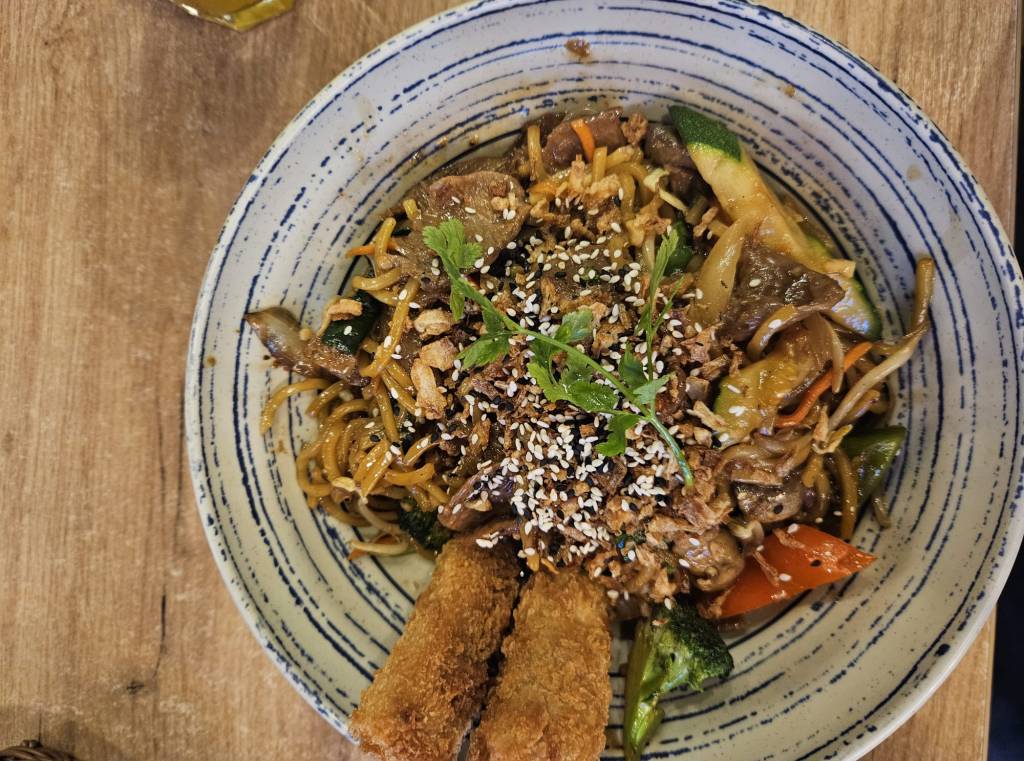
– Fried bread in Lithuania and pasta with tofu and tomato sauce in Germany.
What do you usually do in your free time?
– Fitness studio, reading, gaming.
What is your main character trait?
– I have the ability to laugh about the most random things, and I got told my laugh is kinda hilarious, so other people often join me because of my laugh.
What motivates you to study and do such programs as Erasmus?
– A human is never capable of knowing everything, so we are always capable of learning something new. That motivates me – and it’s also a reason why I want to be a teacher.
The phrase you live by?
– “Du kannst immer etwas dazu lernen” – you are always capable of learning something new.
UNEXPECTED ANGLE
Can you teach some funny or slang German words?
1) “Ey gude wie?”
– This is from my hometown – a German dialect called Hessisch. Germans from other regions usually don’t know what it means. It can be translated to: “Hey, how are you?”
2) “Dikkah / Diggah”
– This is a “new German” word that can be used in many ways. If you are from Frankfurt and born after 2000, lots of people are using it in their youth. It’s like a word for bro or a close friend. For example, instead of “Bro, how are you?” you can say: “Dikkah, how are you?”
Author: Мирослав Жнивень
The photos were sent by Jan


 The EHU Times
Оставить комментарий