
The legendary Formula 1 team, McLaren, known for its historic victories, seems to have had enough of being outsiders. Currently, the team is in its best shape in the past 10 seasons, with good qualifying pace and even victories. The engineers of the English team are shocked by the car they’ve created this season. At the beginning of the year, predictions had them fighting in the midfield…
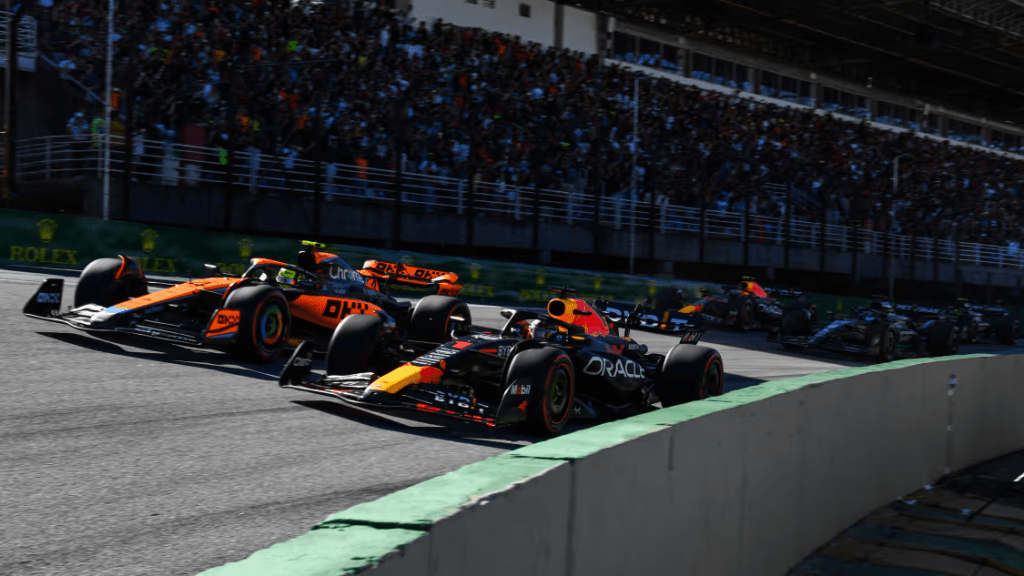
The dark period for the English team did not start yesterday. The team, which had been breaking records and producing champions over four decades, faced several problems in the early 2010s, leading to a state of perpetual crisis.
Let’s start the story from the fact that in the late 2000s, McLaren was involved in a spy scandal involving court proceedings for stealing, copying, and using Ferrari’s technical developments in their car. As a result, McLaren was excluded from the Constructors’ Championship in 2007. However, the drivers’ points were unaffected. Despite this, Ferrari’s Kimi Räikkönen won the championship, with McLaren drivers just one point behind the leader.
In the following seasons, McLaren struggled with reputational damage while continuing to make competitive cars and fight for top prizes. But over time, there was a gradual decline. Initially, they failed to find aerodynamic solutions that worked on real tracks outside the simulator. Some successful solutions were banned by the FIA for being outside the technical regulations.
In 2010, McLaren learned that they were no longer a key customer for their German engine supplier. Mercedes bought the championship team Brawn GP and renamed it after the German brand. McLaren continued to work with Mercedes, although they understood that they might need to find another exclusive engine supplier in the future.
However, the team still achieved some success. Until 2015, they remained in the top five of the Constructors’ Championship, and the drivers finished the season in the top ten of the standings.
In May 2013, the British team made a bold decision. They announced that from 2015 they would switch from Mercedes-Benz to Honda engines. The then-management, led by Martin Whitmarsh, believed that to win in Formula 1 under the current regulations, they needed an exclusive engine supplier to integrate the power unit into the chassis as effectively as possible.
On paper, it sounded fantastic. The revival of the legendary McLaren-Honda partnership, which dominated in the late 1980s and early 1990s. To continue the saga, McLaren signed Fernando Alonso, who was leaving Ferrari, alongside Jenson Button, who had been with the British team for several seasons.
Before the 2015 season, there was a joyous atmosphere in McLaren. There were rumors within the team that the Japanese engine makers had already invented a wonder engine comparable in power to the championship-winning Mercedes power unit. However, these were just rumors, and the Japanese were only measuring the engine’s power on a test stand with additional cooling and full electrical control over the engine. The delay in delivering the complete power unit was justified by a series of refinements and the claim that integrating this engine into the chassis would not be a problem due to its compact design.
When McLaren received the coveted engine and started testing it, it became clear that there was no talk of competing with the top teams; it was a question of whether the car could even finish the race. The engine was the weakest and also unreliable, a situation that persisted throughout the 2015 season.
The reason was that the Japanese from Honda had underestimated the scale of the development needed and entered the project with McLaren too late. They had no experience creating such power units, and the complexity of the engine’s electrical components caused constant new problems.
It is important to note that in 2014, a new regulation came into force in Formula 1, introducing new 1.6-liter V6 turbo engines with a complex hybrid component. Almost all engine manufacturers, except Mercedes, suffered from anomalies, short circuits, and low power in the first year. After Honda’s tough experience with these new engines, no engine manufacturer wanted to return to Formula 1. Changes to the 2026 engine regulations are aimed at simplifying the power units to attract new manufacturers.
In the first year of collaboration, McLaren forgave a lot to their engine supplier, understanding their situation. However, in 2016 and 2017, the situation did not improve significantly. Honda engines were not powerful and continued to break down. It reached the point where finishing in the top ten was considered a big celebration for the English team.
It cannot be said that the problems were only on the Japanese side. Due to failures in races, there were significant disagreements within McLaren about future plans. Nobody wanted to take responsibility, and the atmosphere within the team was tense and hostile. The main managers were pulling in different directions to gain control over the team.
Additionally, communication with the engine suppliers was mediocre. McLaren often couldn’t explain how to better integrate the power unit into the car, while claiming that their chassis was the best in the entire grid.
McLaren driver Fernando Alonso did not shy away from making derogatory comments about the engine. «GP2 engine, GP2!» — as Fernando Alonso said about the Honda engine at the 2015 Japanese Grand Prix. (GP2 is the predecessor to the youth series Formula 2.)
This McLaren-Honda partnership lasted only three seasons. Then, new McLaren management decided to end the partnership with Honda, exchanging engine suppliers with Red Bull’s sister team, Toro Rosso.

As Fernando Alonso summed up the cooperation with Honda in 2017: «They were working, it was visible. The engine supplier was solving the problems that arose during the season. The frustrating part was that at the start of the next season, the development process would reset to zero, and we had to start all over again».
In the end, the situation turned out well for both parties. McLaren caught up with lost ground over a few seasons and became a strong midfield team, while Honda collaborated with Red Bull and fought for championship titles against Mercedes in 2021.
However, it seems McLaren is no longer satisfied with being a midfield team.
In 2022, after radical changes within the aerodynamic regulations, McLaren lost all their momentum and found themselves almost at the back of the grid.
The 2023 season also started poorly for the Englishmen. They had to abandon their past developments and start from scratch. And it worked. By mid-season, McLaren was fighting for podium positions and challenging competitors like Aston Martin and Ferrari. However, Red Bull, especially Max Verstappen, was still out of reach. But this situation remained only until the start of the next season.

In the current 2024 season, McLaren was predicted to have a strong midfield battle, similar to Aston Martin. Forecasts suggested that only if the leaders encountered problems could McLaren challenge them.
But at the beginning of the season, they became regulars in the points zone. By the Miami Grand Prix, they brought significant updates to the car’s floor and aerodynamic elements, which helped them improve significantly. Not just improve but also fight Max Verstappen’s Red Bull on equal footing, and sometimes with a slight but crucial advantage.
Nobody believed in McLaren, saying that their victory in Miami was just luck and local misfortunes for the Red Bull team. But at the next Italian Grand Prix in Imola, McLaren demonstrated that the results in Miami were not luck but hard work within the team. While they couldn’t overtake Max Verstappen’s Red Bull, they were closer than ever, and their lap pace even surpassed the champion’s car at times.
And what do the competitors say?
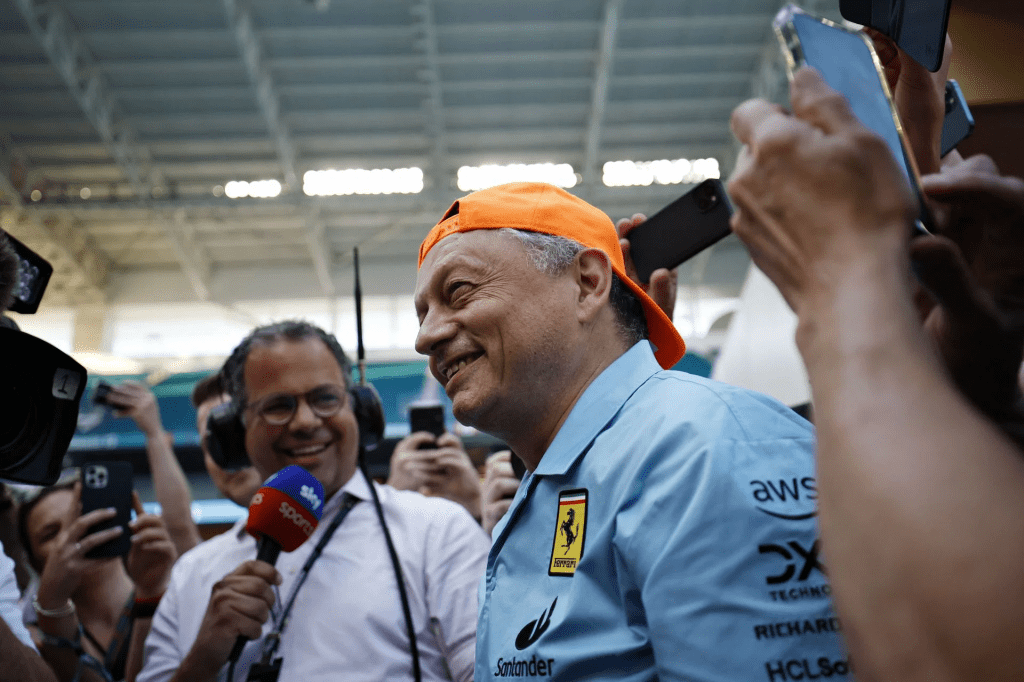
Ferrari officially said little, only noting that McLaren has become «suddenly very fast.» Ferrari’s leader even congratulated McLaren on their victory as if the Italians themselves had won.
Meanwhile, at Red Bull, things are no joke. After the Miami Grand Prix, they said they encountered several issues during the race, particularly with the car becoming unstable when attacking curbs. They also noted McLaren’s new developments and wanted to see how they would perform in the future.
No one counted the Monaco Grand Prix as the track is not representative for modern cars, and Charles Leclerc’s victory for Ferrari only lifted the spirits of Ferrari fans who had waited for this victory for a long time. For Charles, it was finally a closed chapter, proving he could win on his home track.
But at the Canadian Grand Prix in Montreal, everything returned to its usual state. Ferrari fell down the table and couldn’t compete with Red Bull and McLaren. Red Bull won, though the victory was attributed more to Max Verstappen’s skill and consistency than technical dominance of the car.

The Spanish Grand Prix in Barcelona on June 23, as always, showed the real balance of power. Red Bull and McLaren had identical pace under ideal qualifying conditions. But McLaren’s car behaved more stably in slow and long corners, unlike Red Bull, which has been struggling with abnormal car behavior for several races. This stability allows McLaren drivers to better understand the car’s potential and manage tire wear more effectively.
Author: Matsvei Atamanchik




 The EHU Times
Оставить комментарий