
The two-time champion, talented driver, and ageless rookie ― this is just part of what the Spanish Formula 1 driver Fernando Alonso is remembered for. Competing in F1 for over 20 years, he has not only earned the honorable status of a Formula 1 veteran but continues to maintain his talent, finding common ground even with the most unruly machinery and delivering excellent results. However, the Spaniard does not want to stop there: it seems he is ready to fight for a third title. But there is one important caveat…
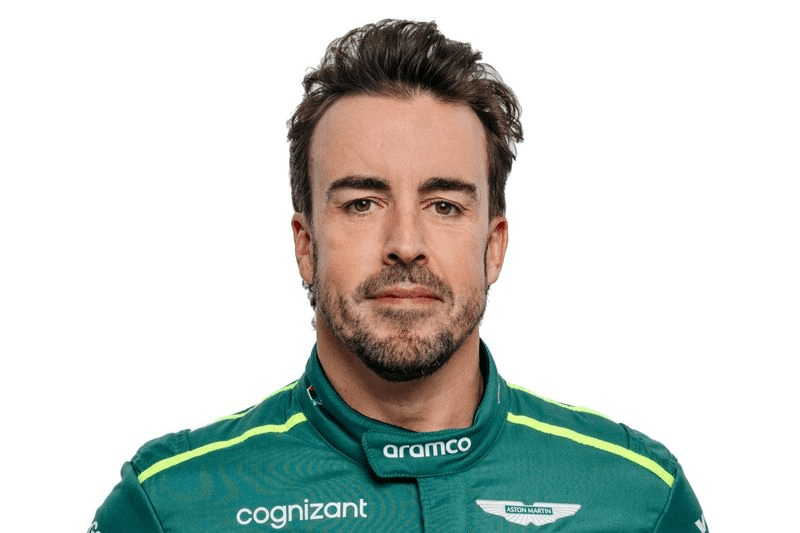
Unlike his peers, the 42-year-old Fernando believes it is still too early to hang up his helmet and racing suit. Competing against Schumacher in the mid-2000s, he proved that age is just a number on a passport.
Last season, Fernando Alonso provided a clear example of this. A decent car and an experienced driver helped Aston Martin score an unimaginable number of points for a mid-tier team. Although a few years ago, many predicted the Spanish driver would leave Formula-1 forever. Let’s try to figure out how the Spanish driver, without dizzying records, managed to become a legend and the most revered driver at the pinnacle of motorsport.
Who is Fernando Alonso?
Unlike Michael Schumacher, Fernando Alonso cannot boast an enviable number of titles. Statistics on wins and pole positions are also not the forte of today’s hero. But it seems this never bothered the Spanish driver.
Fernando’s path to the top podium step in Formula 1 is truly interesting. It all started when Jose Luis Alonso gave his daughter Lorena a real racing kart for her eighth birthday. However, instead of a future doctor, this gift attracted the attention of her younger three-year-old brother, Fernando.
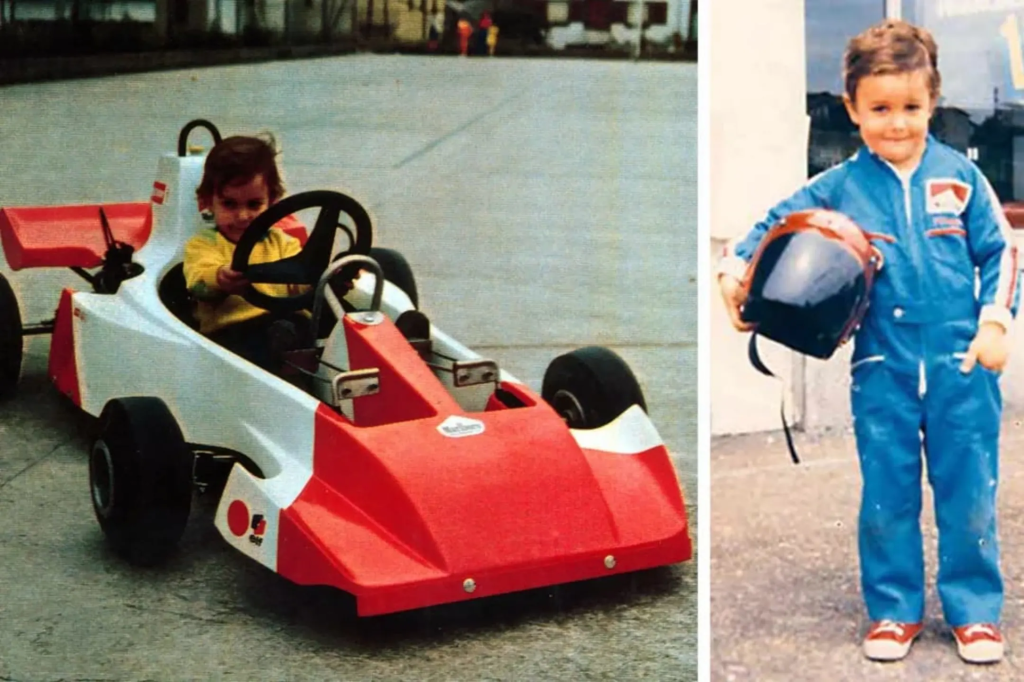
Fernando grew up not in a wealthy family but with an average income. His parents did not try to dissuade the young boy from his rather expensive hobby. On the contrary, the whole family helped Fernando break into motorsport: his father adjusted the pedals to his son’s height, and his mother, Ana Diaz, sewed him racing suits.
From an early age, Fernando had to solve difficult tasks. For example, his parents had enough money only to get the kart to the start, but buying special tires for each track was out of the question. The boy had to find common ground with the machine regardless of the conditions. Fernando was forced to train on slicks in any weather, which helped him develop a unique sense of control over the car on the edge of a skid, which later became his calling card as a driver.
As he grew older, Fernando began honing his professional driving skills in various city competitions. By the age of five, he received a real karting license, and at seven, he won the championship of his home province. The bright talent of young Fernando did not go unnoticed: sponsors supported him, solving the funding problem at the start of his professional racing career. Fernando improved from stage to stage, and soon he justified the most optimistic expectations. At 12, Alonso won the national junior karting championship.
Soon, Fernando realized he needed to move forward. The next step was participating in the Formula Nissan competition. There, things only went uphill: Alonso won six out of 15 races and immediately became the champion. Realizing he needed something more serious, he moved to Formula 3000. But it seems that life decided to temper the future F1 champion and show that the path to glory lies through hardship.
In the new discipline, things did not go well for the Spaniard. He failed to score a single point in the first six races. It seemed like the end, and after the first season, he would be ousted from Formula 3000 with a bang. This championship truly became Fernando’s baptism of fire in big sports. Besides having to quickly learn to work with new equipment, he had to improve his English and soft skills to persuade mechanics to work in his interest.
Fernando scored his first point only at the seventh stage in Austria (at the A1-Ring track) but finished second in the penultimate race at the Hungaroring and won the season finale at Spa-Francorchamps in Belgium. Despite scoring only 17 points in the overall standings, he finished fourth in the championship, behind Bruno Junqueira, Nicolas Minassian, and Mark Webber.
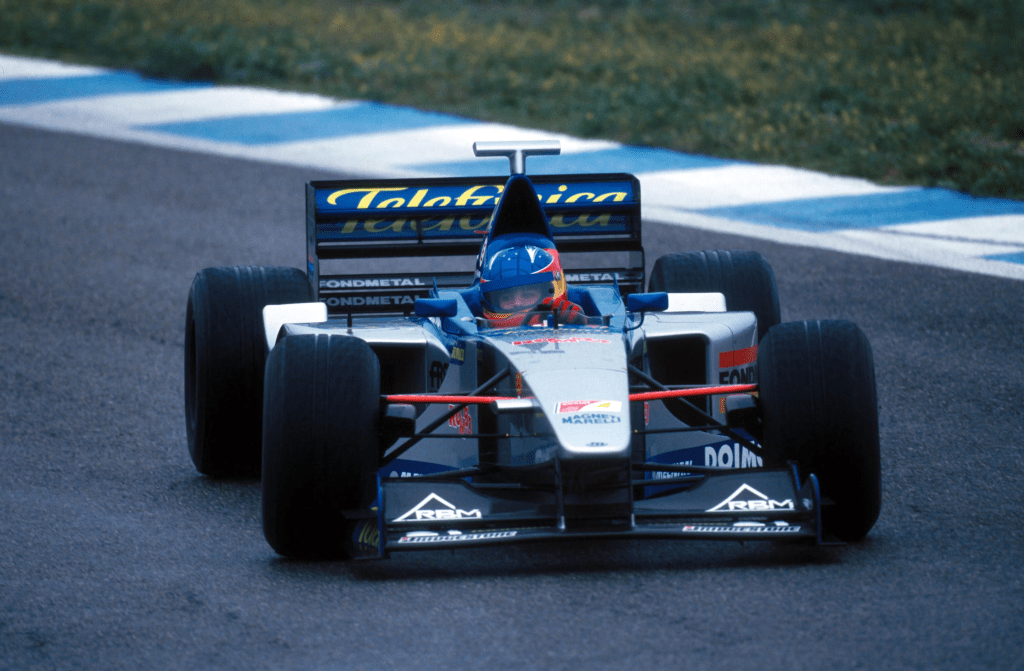
Fernando’s talent and successes did not go unnoticed. Already in 2001, he was offered a place in Formula 1, though there was one nuance. The Minardi team never aimed for the stars but served as a good career springboard for future track stars.
The following year, Alonso became a test driver for the Renault F1 team, securing a spot in the main lineup of the French team in 2003. He won his first race and earned four podiums, finishing sixth in the overall standings for the season. The next year, the Spaniard finished fourth, followed by two golden seasons in a row.
Alonso vs. Schumacher
2005 was a turning point in Formula 1. First, several important changes were made to the technical regulations. Tire changes during races were banned, increasing durability and safety requirements. Engines had to last two race weekends, with a 10-position grid penalty for replacements. Aerodynamic rules were revised to reduce downforce and improve overtaking, but teams found ways to restore lost characteristics. 2005 also marked the last year for 3,0-liter V10 engines before switching to 2,4-liter V8s in 2006, although one team was allowed to use restricted V10s due to budget constraints.
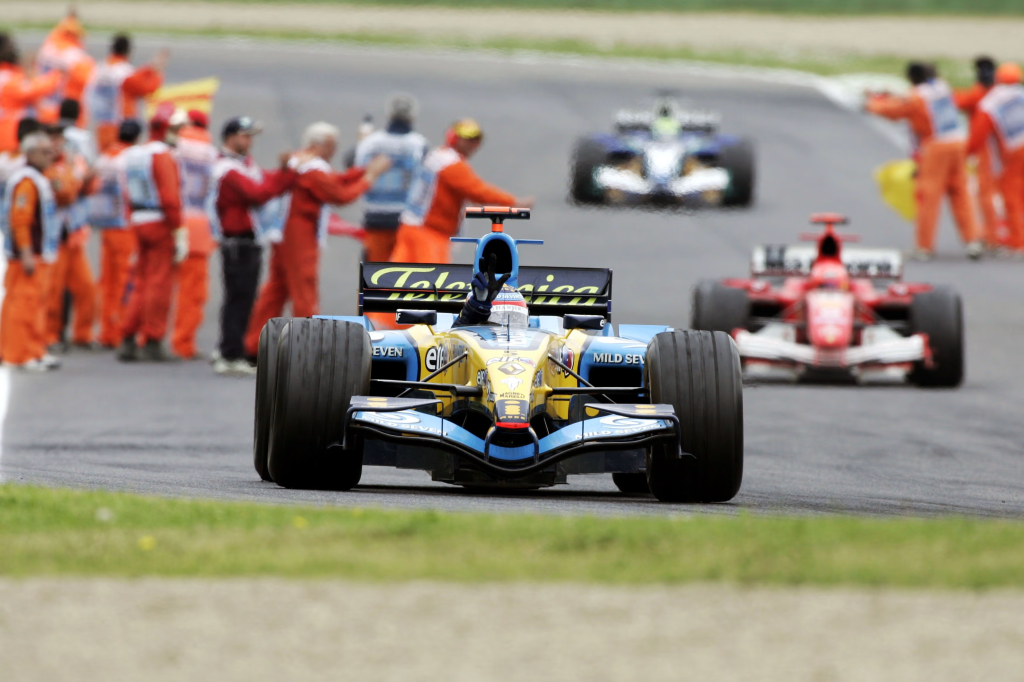
The Mild Seven Renault F1 team significantly excelled in upgrading their car. Engine dimensions were modified, a new six-speed gearbox was developed while competitors used seven-speed variations. A mass damper was also developed to reduce excessive vibrations on curbs, preventing tire bald spots. This clever solution allowed the French team to look much better against the new FIA tire restrictions.
However, close competitors from Ferrari and BAR Honda failed to surprise with equally effective innovations, so they could only dream of solving their own problems, not fighting for the title.
Fernando Alonso immediately understood the kind of machinery he had at his disposal and began to pursue his cherished goal. The Spanish driver mercilessly dominated his new teammate and aimed for the championship title. Although Giancarlo Fisichella won the first race in Melbourne, Alonso climbed from 13th to 3rd despite the rainy qualifying session.
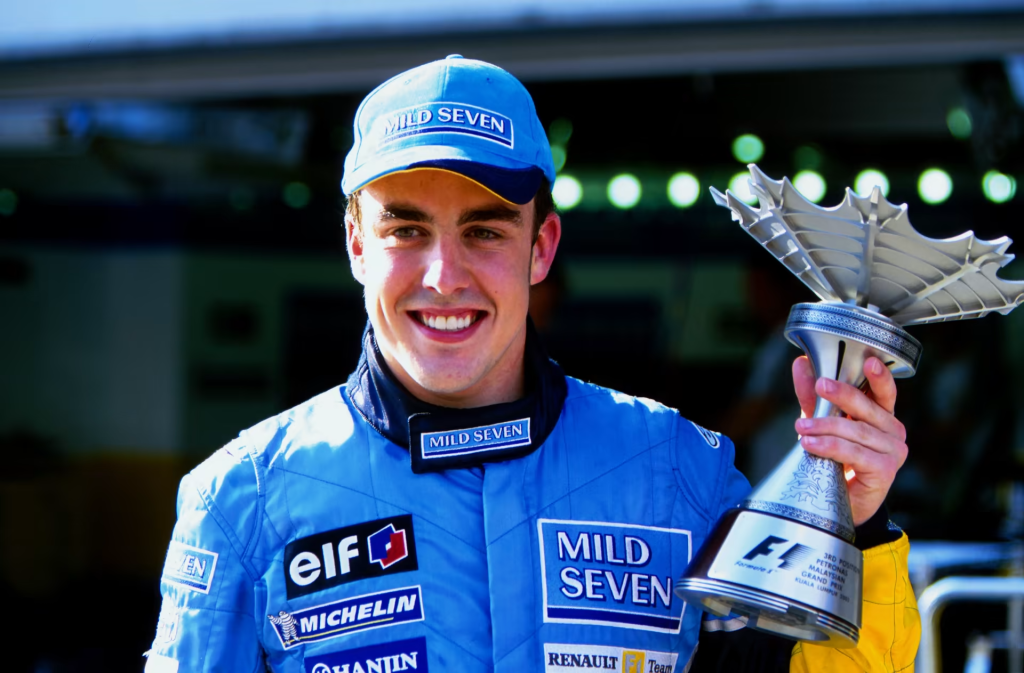
The rest of the victories that year were claimed by Alonso, who won seven races and secured the championship title. His Renault was only slower than the McLaren of Kimi Raikkonen, but the Renault R25 was more reliable. In the end, Alonso became the driver who ended Schumacher’s streak of five consecutive championships. Surprisingly, after such a bright season, Alonso announced in December 2005 that he would leave Renault and join McLaren in 2007.
Alonso dominated the early races, but Schumacher began a counterattack mid-season. In 2006, Ferrari, although not immediately, managed to regain their form. The championship fight continued until the final race, filled with tense and controversial moments.
After nine races, Alonso scored 84 out of a possible 90 points, even more than Schumacher in his dominant 2004 season. But Ferrari, with new aerodynamic improvements, new Bridgestone tires, and Schumacher’s persistence, who announced his retirement at the end of the season, managed to return to the fight.
As is usually the case when the battle between F1 drivers reaches its peak, various backstage games with accusations against competitors or the system itself come into play. Here is a selection of key moments between Alonso and Schumacher:
- Renault lost its innovative mass damper device due to a ban, leading to accusations of bias in favor of Ferrari.
- At the Monza Grand Prix, Alonso was penalized for allegedly obstructing Schumacher’s teammate Felipe Massa. Alonso was outraged and declared, «I no longer consider Formula 1 a sport»
- Incidentally, on that day, Schumacher won the race and announced his retirement. Alonso retired due to an engine failure while running third.
- At the Japanese Grand Prix, Bridgestone tire manufacturers showed a significant advantage in qualifying over Michelin. Both Ferraris and both Toyotas outqualified Alonso. The Spanish driver overtook both Toyotas early in the race and closed in on Schumacher. In the intense battle on the Japanese Suzuka track, Alonso’s car, which had already let him down twice that year, held up this time while Schumacher suffered a failure. Alonso won the race.
In summary, Fernando Alonso won the championship title in the last race of the season when Schumacher again encountered car problems. The Spanish Renault driver triumphed in a fierce battle against the seven-time champion and became the youngest driver at that time to win the championship twice in a row.
Post-2006: Struggles within McLaren
After 2006, Fernando Alonso’s tenure with McLaren turned tumultuous. Rookie Lewis Hamilton constantly obstructed him, and the team’s management was indecisive about designating Alonso as the number one driver. The 2007 championship battle was as intense as the previous year.
At the Hungarian Grand Prix, team relations deteriorated. Hamilton disobeyed team orders to let Alonso pass during qualifying, and Alonso retaliated by delaying Hamilton in the pits, preventing him from setting a final lap time. Stewards penalized Alonso, and McLaren failed to provide a satisfactory explanation.
Throughout the season, McLaren defended against accusations of receiving confidential information about Ferrari’s car. Team principal Ron Dennis revealed that before the Hungarian GP, Alonso had threatened to disclose compromising information about the espionage scandal unless Hamilton was restrained.
Alonso was close to securing his third consecutive championship that season. However, he finished third overall, just one point behind winner Kimi Räikkönen and tied with teammate Lewis Hamilton.
McLaren’s policy of equal treatment for both drivers further alienated Alonso, who publicly expressed dissatisfaction with the team’s operations.
In the final race of the season, Alonso and Hamilton could not prevent Räikkönen from clinching the title. Shortly after the season ended, McLaren terminated Alonso’s contract, and he returned to Renault in 2008.
Struggles with Renault and Ferrari
By then, Renault was no longer in top form, and Alonso could only occasionally secure podium finishes. After Renault, Alonso moved to Ferrari, where he showed good results but not enough to beat Sebastian Vettel in the Red Bull designed by legendary engineer Adrian Newey.
From 2014 onwards, Alonso not only lacked a competitive car but also a reliable one. McLaren, which Alonso joined in 2015, switched to Honda power units, which quickly earned a reputation for being slow and unreliable. This situation was unacceptable to Alonso, who was not one to suffer quietly.
Conflicts between the Spanish driver and the engine manufacturer escalated to the point where Alonso publicly criticized the Japanese engine maker. Alonso spent three seasons in a car plagued with problems. In the end, McLaren agreed to an «exchange» with Red Bull and Toro Rosso for power unit suppliers. In 2018, Alonso had his final season with McLaren, simultaneously winning the 24 Hours of Le Mans with Toyota.
Pursuit of the Triple Crown
Alonso then set his sights on motorsport’s «Triple Crown», which involves winning the Monaco Grand Prix, the Indianapolis 500, and the 24 Hours of Le Mans. While he had already succeeded in two of these, the Indy 500 remained elusive, partly due to a failed Honda power unit.
After 2018, Alonso left Formula 1 but did not rule out a return. In 2019, he won Le Mans again, and in the second half of 2020, he released a video on social media, smiling broadly as he announced his reunion with Renault, which would be rebranded as Alpine in 2021.
Successful Return and Move to Aston Martin
Alonso showed excellent results for a mid-field team and made it clear he still had the capability to deliver strong performances. At the Hungarian Grand Prix in 2021, he had an impressive duel with then-reigning champion Lewis Hamilton, reinforcing the belief that with the right machinery, Alonso could still compete for top prizes at 40.
Alonso proved this was not mere talk. In mid-2022, he announced a move to Aston Martin, justifying it with the team’s promising future and his logical ambition to secure a good position for the next few seasons.
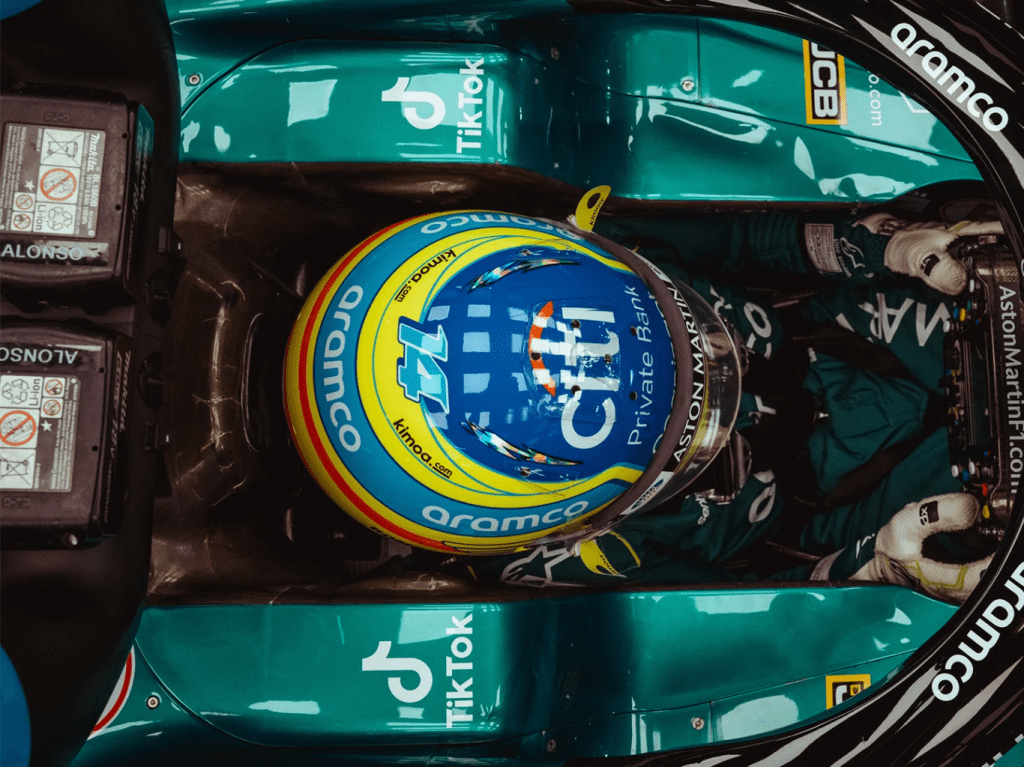
In 2023, things fell into place. Alonso started the season with one of the strongest cars, while his previous team Alpine delivered mediocre results. Alonso consistently secured podium finishes in nearly every race of the first half of the season, impressing the team with his performance even in challenging conditions, such as in the rain.
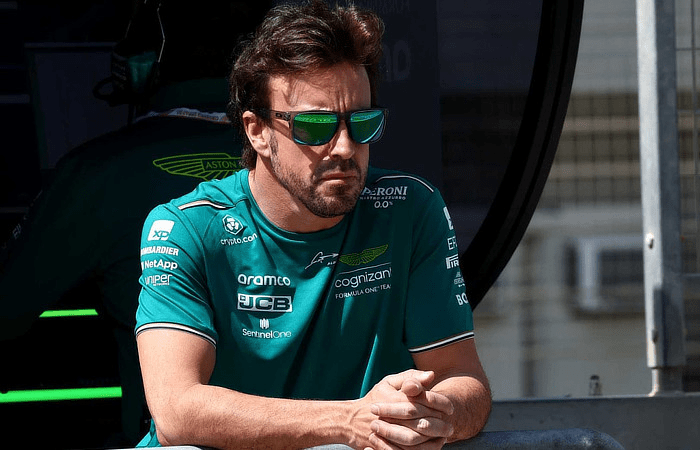
In 2023, it was also announced that Honda would join Aston Martin as an engine supplier from 2026. Fans speculated whether Alonso would accept this «challenge». It turned out he would, as in 2024, Alonso posted another video on social media, announcing the extension of his contract until 2026.
Alonso is determined to break his «Honda curse» and is ready to renew his collaboration with the Japanese engine maker. He expressed that Aston Martin’s exclusive engine supplier status with Honda would provide a significant advantage. Alonso also suggested that this strategy had helped Red Bull win championships, implying that Aston Martin has a good chance of building a fast car. In short, he is excited to work with Honda again and aims to win a third title at the twilight of his career.
Author: Matvei Atamanchik



 The EHU Times
Оставить комментарий